Products
Adheres to the customer demand orientation
PRODUCTS CENTER

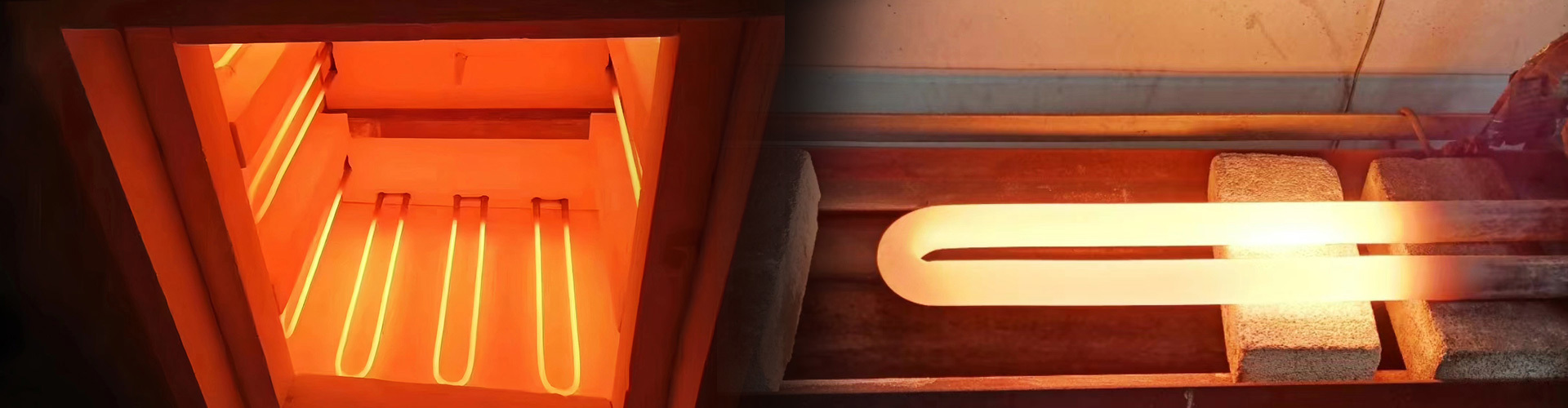
MoSi₂ heating element is a kind of resistance heating element with high temperature resistance and oxidation resistance made of molybdenum disilicide. When used in high-temperature oxidizing atmosphere, like other Si based high-temperature resistant materials, MoSi₂ surface will rapidly form a bright and dense quartz (SiO₂) glass film under high temperature and oxygen atmosphere, which can protect the inner layer of silicon molybdenum rod from further oxidation. Therefore, silicon molybdenum rod elements have unique high-temperature oxidation resistance.
Mosi₂ Heating Element is one resistance heating component made from MoSi₂ or as the basic material. When it's heated to high temperature under the oxidizing atmosphere, one dense MoSi₂ film will be formed on its surface to protect the element against oxidizing further. Therefore, the element has unique anti-oxidation property under high temperature atmosphere. The highest temperature can reach 1900°℃, the applicable temperature is between 500-1800℃.
MoSi₂ element is matched with the automatic power supply system, which can not only obtain accurate constant temperature, but also automatically adjust the temperature according to the curve according to the actual needs of the production process. It has been widely used in the fields of national defense, machinery, metallurgy, light chemicals, ceramics, semiconductors, analysis and testing, scientific research, and has become the electric heating element of various electric furnaces and kilns. Tunnel kiln, roller kiln, glass furnace, vacuum furnace, muffle furnace, smelting furnace and various heating equipment are convenient, safe and reliable.
The connecting wires that come into contact with MoSi₂ components are made of aluminum braided tape or multi-layer aluminum foil. The clamp on the outside can only serve as a clamp and does not need to conduct electricity. The end of the wire is connected to the busbar. To prevent stress from being transmitted to the component, the length of the wire should be slightly greater than the straight distance between the component and the busbar.
Whatsapp:
+86 155 3819 8157(Miya)
+86 155 3819 8275(Connie)