Products
Adheres to the customer demand orientation

Uzbekistan SPK Customized MoSi₂ heating element
Category:
UzbekistanMoSi₂ Heater
Product Description
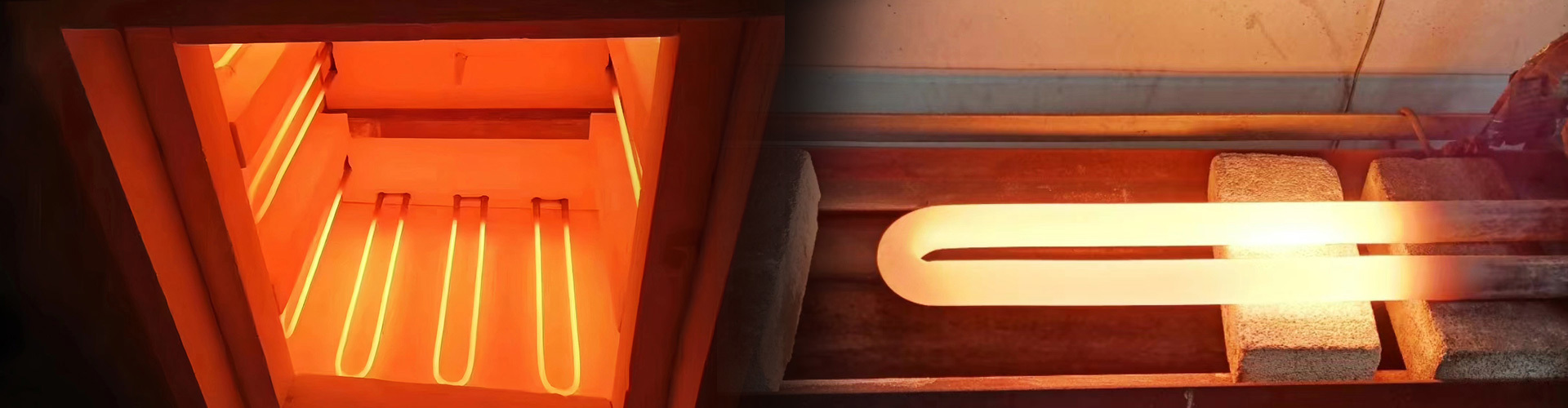
MoSi2 resistive heating element is a high temperature resistant and anti-oxidation resistance heating element based on molybdenum disilicide. When used in high-temperature oxidizing atmosphere, a layer of bright and dense quartz (SiO2) glass film is formed on the surface, which can protect the inner layer of the silicon molybdenum rod from oxidation, so the silicon molybdenum rod element has unique high-temperature oxidation resistance.
Under oxidation atmosphere and the maximum service temperature is 1800 ℃, the resistance of the silicon molybdenum rod electric heating element increases rapidly with the increase of temperature, and the resistance value is stable when the temperature is constant. Under normal conditions, the element resistance does not change with the length of service time, so the new and old silicon molybdenum rod heating elements can be mixed.
Physical Properties of MoSi2 Heating Elements
|
Physical properties |
||||
|
Volume Density |
Bend Strength |
Porosity Rate |
Water Absorption |
Hot Extensiblity |
|
5.5-5.6g/cm³ |
15-25kg/ cm2 |
7.4% |
1.2% |
4% |
Chemical characteristics of MoSi2 heating element
Oxygen-resistance under high temperature: in oxidizing atmosphere, a layer of compact quartz protective film is formed on the surface of element owing to the high temperature combustion, which prevent Mosi2 from oxidizing more. When the element temperature is higher than 1700 °C, the film becomes melting. It’s not suitable for long time use in the temperature range of 400-700°C, otherwise, the element will be powdering for the strong oxidation under low temperature.
Whatsapp:
+86 155 3819 8157(Miya)
+86 155 3819 8275(Connie)